Bond for Deed Myth #1: It’s Something Scary and New
When it comes to creative financing in real estate, few tools are as misunderstood—and underutilized—as the Bond for Deed.
When it comes to creative financing in real estate, few tools are as misunderstood—and underutilized—as the Bond for Deed. Often confused with newer or niche financing strategies, Bond for Deed is a long-standing legal instrument with deep roots in Louisiana real estate law.
In this post, we’ll kick off our series by addressing the first major myth:
“Bond for Deed is a new or experimental concept.”
Let’s set the record straight.
🏡 What Is a Bond for Deed?
At its core, a Bond for Deed is a form of seller financing, much like a private mortgage or credit sale. The key distinction is this:
- Title stays in the seller’s name until the buyer completes all payments under the contract.
- Once the contract is paid in full, the seller is legally obligated to transfer title to the buyer.
This structure offers flexibility for both parties and can be especially useful when traditional mortgage financing isn’t a possibility—or isn’t ideal.
📜 A Legal Framework Rooted in History
Despite what some agents or buyers may assume, Bond for Deed is not a new creation. In fact, it has been used to finance property in Louisiana since the late 1800s. That’s over 150 years of history.
The formal legal framework was set up in 1934, when Louisiana enacted statutes specifically governing Bond for Deed transactions. These laws laid out clear guidelines for how the contracts should be structured, enforced, and fulfilled.
Since then, many court cases have further clarified and reinforced these statutes, giving buyers, sellers, and agents a reliable legal foundation to build upon.
⚖️ Why Louisiana Is Unique
One reason Bond for Deed is often misunderstood is that most states don’t have codified laws regulating seller financing in this way. In many places, seller financing is managed through loosely defined contracts, with little legal precedent or protection.
Louisiana is different.
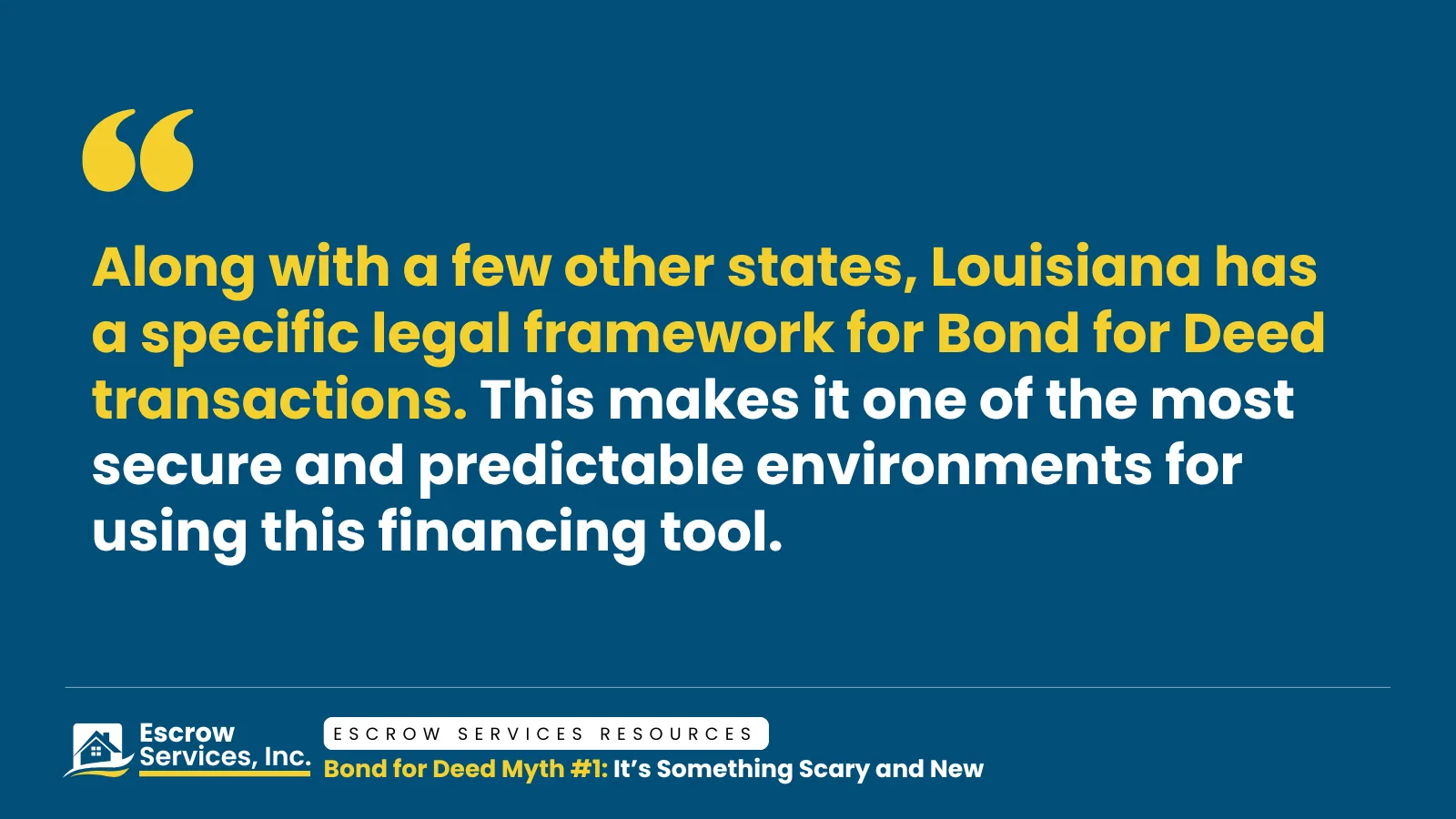
Along with a few other states, Louisiana has a specific legal framework for Bond for Deed transactions. This makes it one of the most secure and predictable environments for using this financing tool.
For agents and investors working in Louisiana, this is a major advantage. You’re not operating in a legal gray area—you’re working within a well-established system.
💡 Why This Myth Persists
So why do so many people think Bond for Deed is new or risky?
Here are a few reasons:
- Lack of exposure: Many agents and buyers simply haven’t met Bond for Deed before.
- Confusion with other financing tools: It’s often lumped in with lease-purchase agreements or land contracts, which may not have the same legal clarity.
- Outdated assumptions: Some professionals assume that if it’s not backed by a bank, it must be informal or risky.
But as we’ve seen, Bond for Deed is neither new nor untested. It’s a time-honored method of financing that continues to serve buyers and sellers across Louisiana.
✅ What This Means for You
If you’re a real estate agent, investor, or buyer in Louisiana, understanding Bond for Deed can open new opportunities:
- Help buyers who can afford a mortgage but don’t qualify for one today.
- Offer sellers a way to reach a broader pool of buyers.
- Structure deals that are flexible, secure, and legally sound.
And most importantly, you’ll be working with a tool that’s backed by over a century of legal precedent.
📣 Stay Tuned
This is just the beginning of our Bond for Deed Myths series. In upcoming posts, we’ll tackle other common misconceptions—like who Bond for Deed is for, how defaults work, and whether sellers receive help from these arrangements.
If you have questions or want to explore how Bond for Deed could work in your next transaction, we’re here to help.
Contact Escrow Services, Inc.:
📞 (985) 626-3727
📧 service@escrowserviceinc.com
🌐 escroserv.com